
Gate Access Control for West Michigan Properties
Published October 29, 2026 by the FineLine Low Voltage Solutions team
A gate at the end of a long driveway is common across West Michigan, on farms, lake homes, hunting property and rural homes set well back from the road. Many of those gates already have a working opener, but letting people in is still a hassle. Someone drives down to open it, a remote gets passed around, or the gate is left open all day because it is easier. Gate access control fixes that. Our team adds the parts that decide who gets in, and connects them to the opener you already have.
What a gate access system includes
Most gate systems we install are built from a few parts, and you can start with one and add others later.
Keypads. A keypad on a post at the gate lets family, workers and regular visitors enter a code. Codes can be given to one person and removed later without changing anyone else's.
Fob and card readers. A reader lets people open the gate by holding a fob or card up to it. Fobs work well for farm workers and family members who come and go many times a day, and a lost fob can be turned off from the app.
Intercoms. A video intercom at the gate lets a visitor press a button and talk to you on your phone. You can see who is there and open the gate from wherever you are, which is useful for deliveries and service visits.
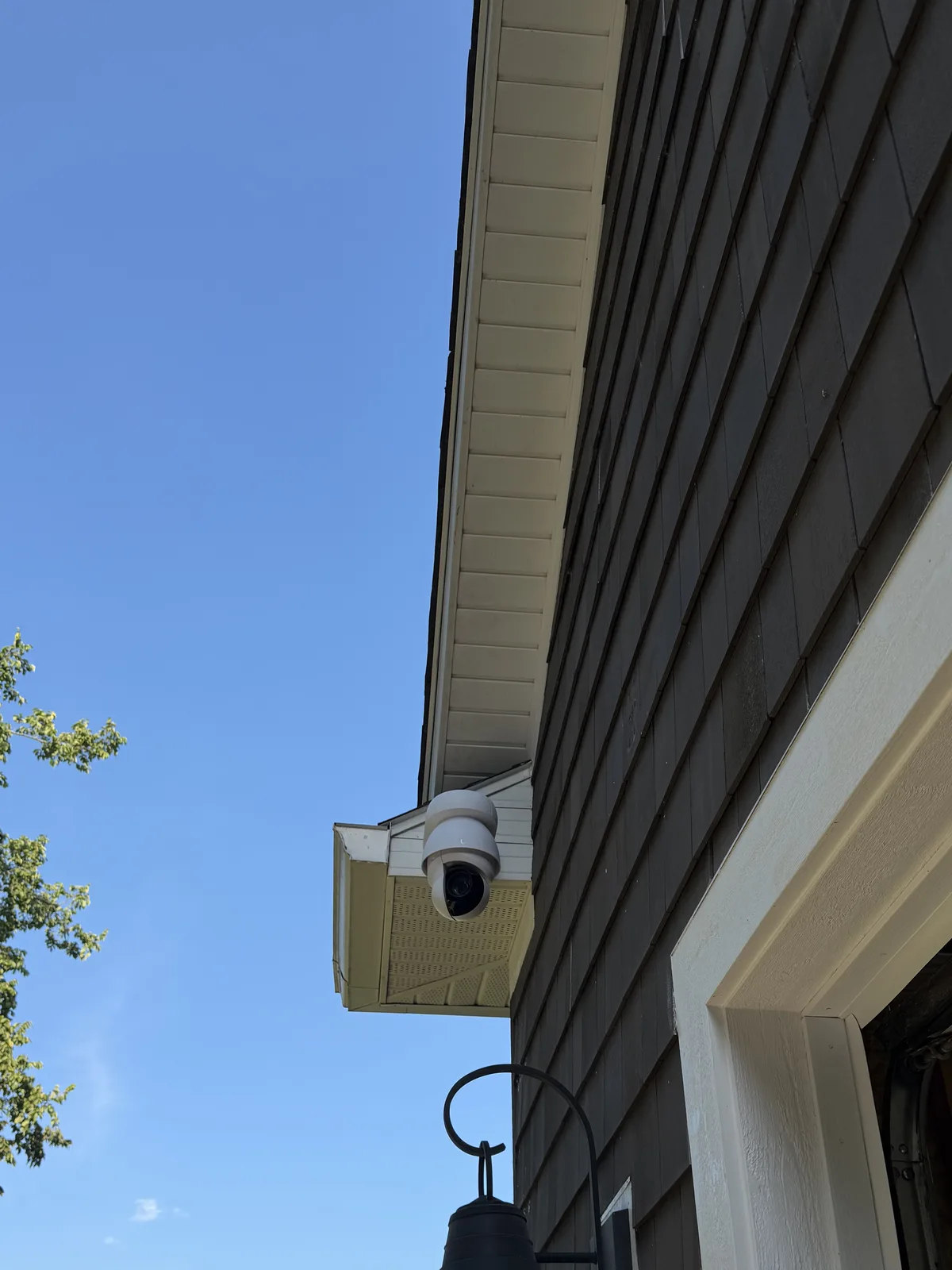
A camera at the gate. Many owners add a security camera that looks at the gate and the driveway, so every entry is recorded. On UniFi systems, Protect AI cameras can also support license plate based unlocking for known vehicles.
On UniFi systems, the gate side is usually built around the UniFi Access Gate Hub (UA-Hub-Gate), which connects readers and the intercom to the gate operator, along with the UniFi Access Intercom. We choose the parts for each property after we walk it, because the right setup depends on how many people use the gate and how far it sits from the house.
We connect to the opener you already have
Most gate operators already have a way to accept an open signal from an outside device. In most cases we wire our access hardware into that input, so the opener, the arms or slide track and the safety sensors stay as they are. You keep the opener you paid for, and it gains keypad, fob, intercom and phone control.
When we visit, we look at the operator model, its control board and the existing wiring before quoting. If the opener is failing or the gate itself needs repair, we tell you up front so you can bring in a gate company for that part first.
Getting a signal out to the gate
Distance is the main challenge on rural properties. A gate might be 300 feet from the house, or a quarter mile down a farm lane. The access hardware at the gate needs a network connection back to the house, and there are two common ways to provide one.
Buried cable. Where it is practical, a cable in conduit is the most reliable link. Network cable is limited to about 328 feet (100 meters) per run, so longer distances use a point-to-point wireless link or a powered switch in between.
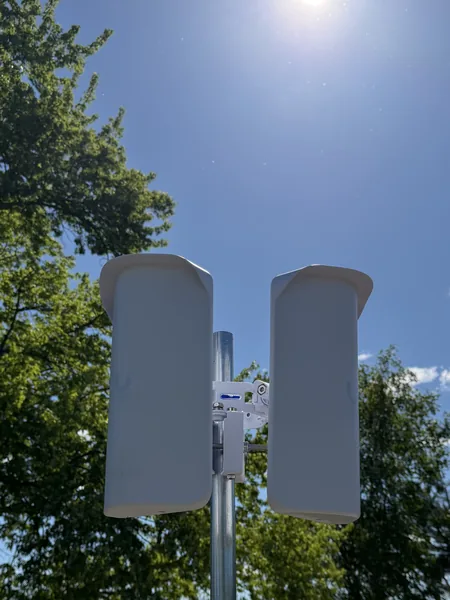
A wireless link. When trenching is not practical, we use a point-to-point wireless link: one radio at the house and one at the gate, aimed at each other. With a clear line of sight these links carry a strong signal over long distances. We built this kind of network on a large ranch property, where radios on a mast connect buildings across the land with no trenching. Our guide to rural Wi-Fi and point-to-point links covers how these links work.
In both cases the gate equipment can be powered over the network cable, so the keypad, reader or intercom does not need its own outlet.
Power: where an electrician comes in
Our team is a low voltage installer. We handle the keypads, readers, intercoms, cameras, network cable and wireless links, all of which run on low voltage or Power over Ethernet. If the gate needs new 120V power, for example a new circuit for an opener, an outlet at the gate post or power for a radio mount far from the house, that wiring needs an electrician. We are happy to coordinate with your electrician so the power is in place before we install.
What day-to-day use looks like
Once the system is set up, you manage it from an app on your phone. You can add a code for a contractor and remove it when the job is done, give a family member a fob, see a log of who came through and when, and open the gate for a delivery while you are at work. If you add a gate camera, each entry can be matched to a video clip.
Before we leave, we walk you through the app, test every way of opening the gate and show you what to do if the power goes out.
Planning a gate access project
A few questions help us give you an accurate quote:
- What gate operator do you have, and does it work well today?
- How far is the gate from the house or the nearest building with internet?
- Is there a clear line of sight from the house to the gate?
- Who needs to get in: family, workers, deliveries, renters?
- Do you want a camera recording the gate and driveway?
We install gate access control for farms, rural homes and businesses around Big Rapids, Canadian Lakes, Mount Pleasant, Cadillac, Rockford, Cedar Springs and surrounding areas. Estimates are free, and the systems we install have no required monthly fees from us.
Frequently asked questions
Do I need a new gate opener?
Usually not. Most operators accept an open signal from an outside device, so we connect keypads, readers and intercoms to the opener you already have.
Can I open the gate from my phone?
Yes. With an intercom or access hub connected to the network, you can open the gate from the app wherever you are.
Who handles the 120V power at the gate?
An electrician. Our team handles the low voltage side and can coordinate with your electrician.