
Security Camera Systems for Homes, Farms and Businesses Around Big Rapids
Published October 29, 2026 by the FineLine Low Voltage Solutions team
Security cameras are one of the most common requests we get, from homeowners in town to farms, lake homes and small businesses across West Michigan. Many people start with a battery camera from a big box store, and many of them call us after the batteries die in the cold, the Wi-Fi drops at the far end of the yard, or the app asks for a monthly subscription to see recorded video. A professionally installed system works differently.
How a hardwired camera system works
In the systems we install, each camera connects with a single network cable that carries both video and power, using Power over Ethernet (PoE). There are no batteries to charge and no outlet needed at the camera. The cables run back to a PoE switch and a network video recorder (NVR), which stores the video on hard drives inside your home or business.
Because recording happens on site, the cameras keep recording if the internet goes down. Your internet connection is only needed to watch live or recorded video from your phone when you are away. On UniFi systems, viewing is done through the UniFi Protect app, and there is no required monthly fee to use it.
Choosing the right cameras
Different camera styles suit different spots, and most systems use a mix:
- Turret cameras are compact and easy to aim, a good fit for corners of a house or barn.
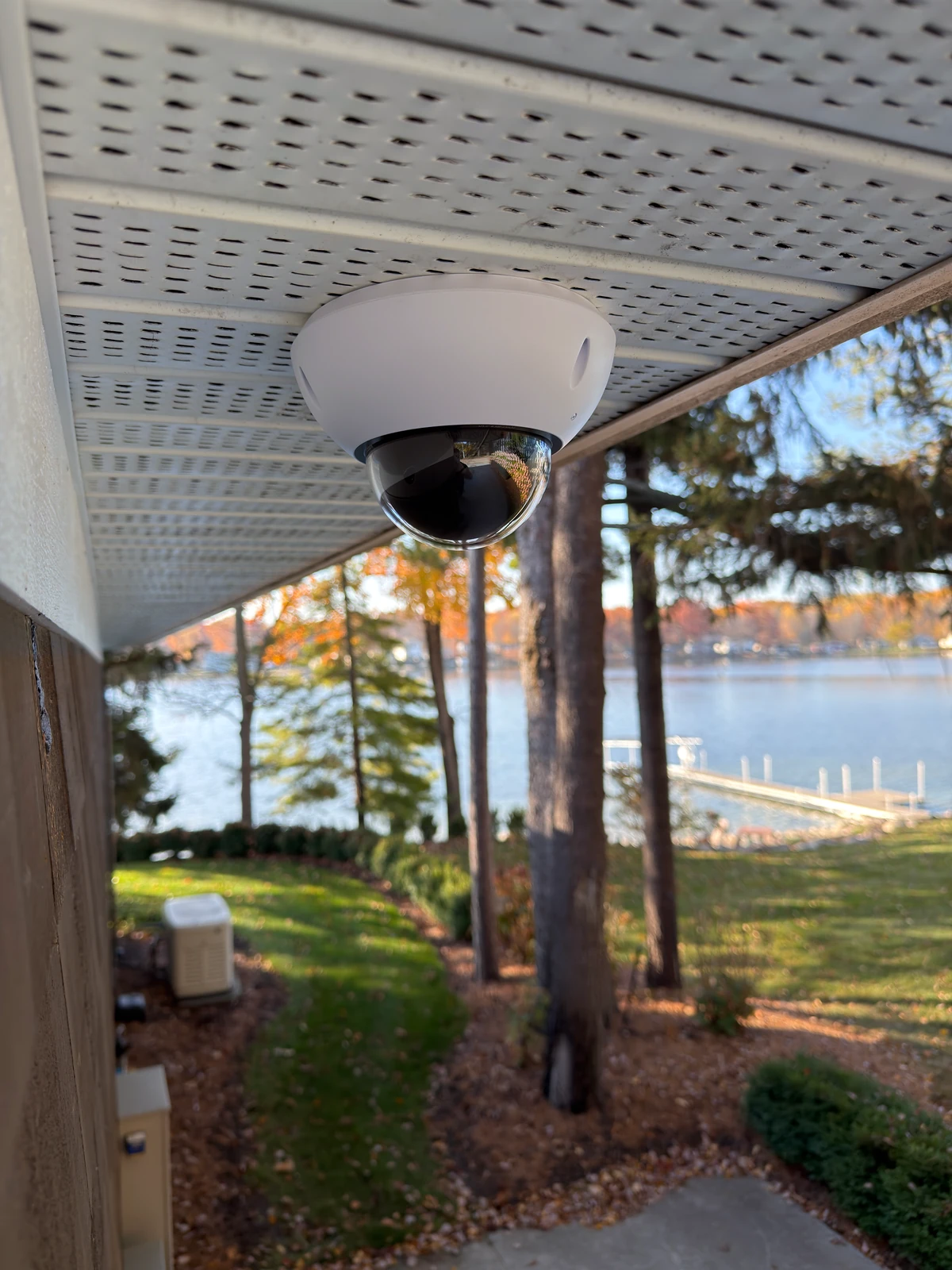
- Dome cameras sit tight under a soffit or porch ceiling and are hard to knock out of position.
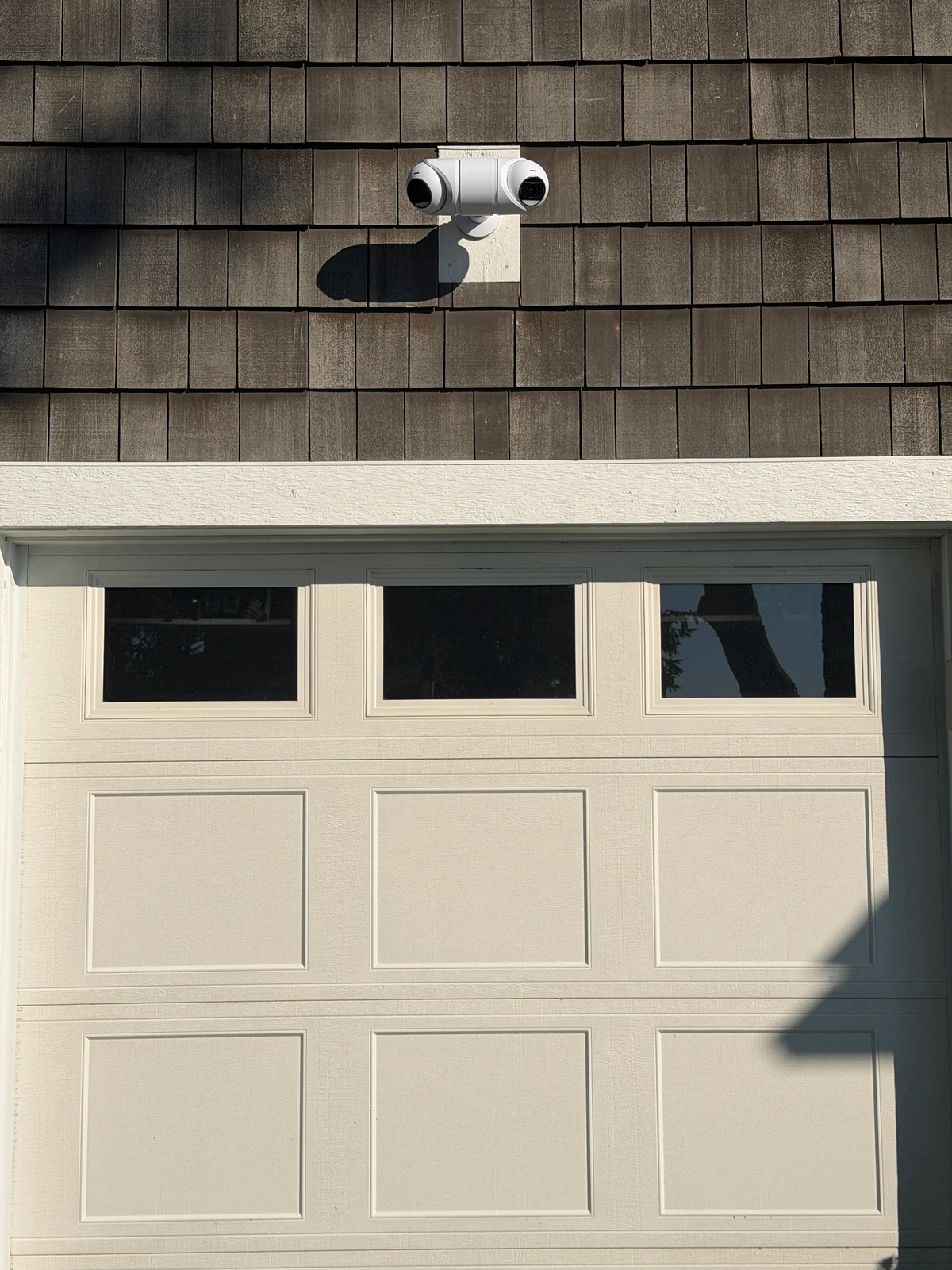
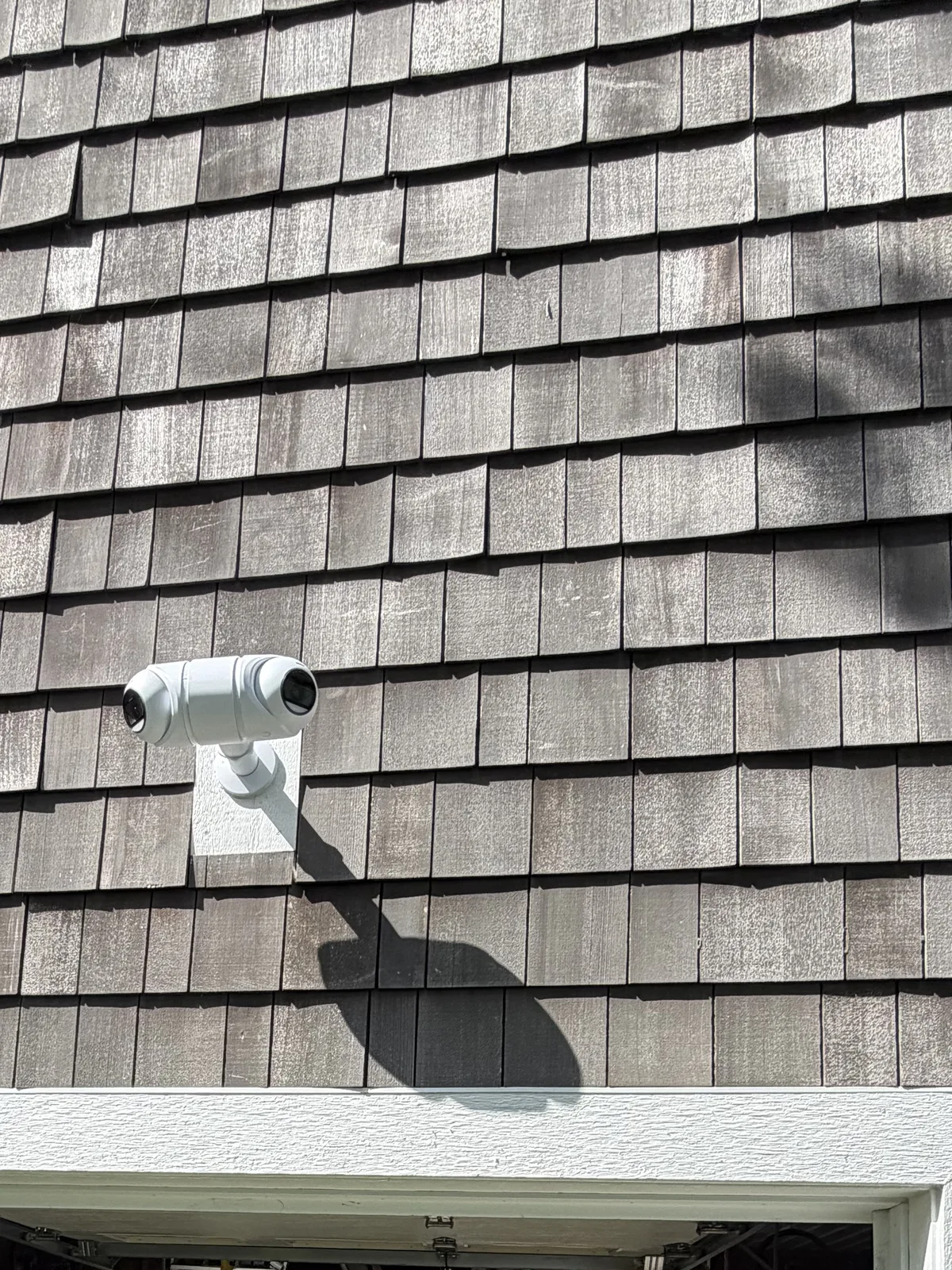
- Dual-lens cameras watch two directions from one mount, such as a driveway and a side yard.
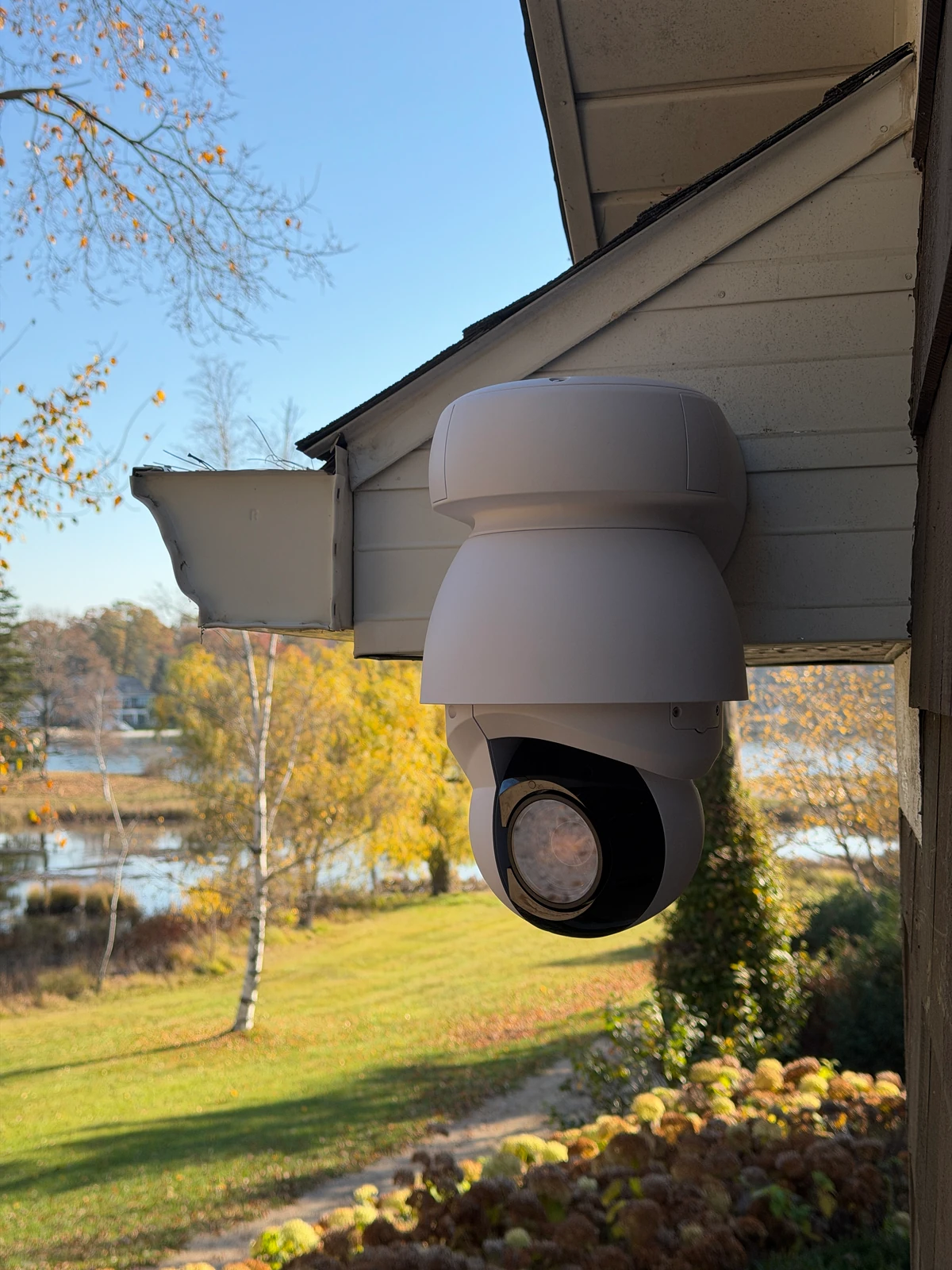
- Pan-tilt-zoom (PTZ) cameras can pan across a large area and zoom in on a detail, which suits open lawns, fields and waterfronts.
On a lake home camera system we installed, a PTZ camera under the gable covers the lawn toward the water, dome cameras under the soffits watch the lake side, and a dual-lens camera above the garage covers two directions from one spot.
Where cameras are most useful
The best camera placement depends on how people and vehicles move around the property. On most jobs we start with these areas:
- The driveway and entrance, so every vehicle that comes in is recorded.
- Doors, including the back door and the garage.
- Outbuildings, such as pole barns, shops and equipment storage.
- Gates, especially on farms and rural properties.
- Waterfronts and docks on lake properties.
- Registers, stock rooms and parking areas for businesses.
We walk the property with you before quoting, check what each camera will actually see and avoid pointing cameras at neighbors' homes.
Covering barns and outbuildings
Outbuildings are often the reason people call. A pole barn 400 feet from the house is too far for a single cable run and too far for most Wi-Fi cameras. We bring the network out first, with buried Ethernet or a point-to-point wireless link, then mount cameras on the barn and wire them locally. Our rural Wi-Fi guide explains those links. Once the network reaches the barn, it can also carry Wi-Fi for the shop, as in our pole barn shop Wi-Fi project.
Recording and storage
How long video is kept depends on the number of cameras, their resolution and the size of the drives in the recorder. A small home system might keep several weeks of video, while a large system with many cameras may keep less unless larger drives are added. Many systems can also record continuously on some cameras and only on motion on others, which stretches the storage further. We size the recorder for your cameras and tell you roughly how many days you can expect before we install.
Motion alerts can be set for specific areas, such as the driveway or a gate, so you are notified when a vehicle pulls in without getting an alert every time a tree moves in the wind.
Built for Michigan weather
Cameras outdoors here face snow, ice, wind and summer heat. We use outdoor-rated cameras and cable, seal every entry point through the wall, and mount cameras where snow and ice will not build up over the lens. Hardwired cameras also avoid one of the biggest problems with battery cameras: short battery life in cold weather.
Questions to ask before you buy
- Where is the video stored, and what happens if the internet goes down?
- Is there a monthly fee to view recordings?
- How many days of video will the system keep?
- Can I add cameras later without replacing the recorder?
- Will someone show me how to use the app before the installer leaves?
With our security camera installs, video is stored on site, there are no required monthly fees from us, and you get a walkthrough before we leave. We serve Big Rapids, Canadian Lakes, Mount Pleasant, Cadillac, Rockford, Cedar Springs and surrounding areas, and estimates are free. See our cost guide for what affects price.
Frequently asked questions
Do the cameras work without internet?
Yes. They record to a recorder on site. Internet is only needed to view video remotely.
Is there a monthly fee?
Not from us. The systems we install have no required monthly fees for viewing or recording.
Can you add cameras to a barn far from the house?
Yes. We bring the network to the barn with buried Ethernet or a point-to-point wireless link, then wire the cameras there.